Nov 19, 2026
These 7 Retirement Planning Mistakes Could Leave You Financially Unprepared Later
- Sarah Nelson

What Bond Duration Risk Means for Your Savings and Long Term Investments
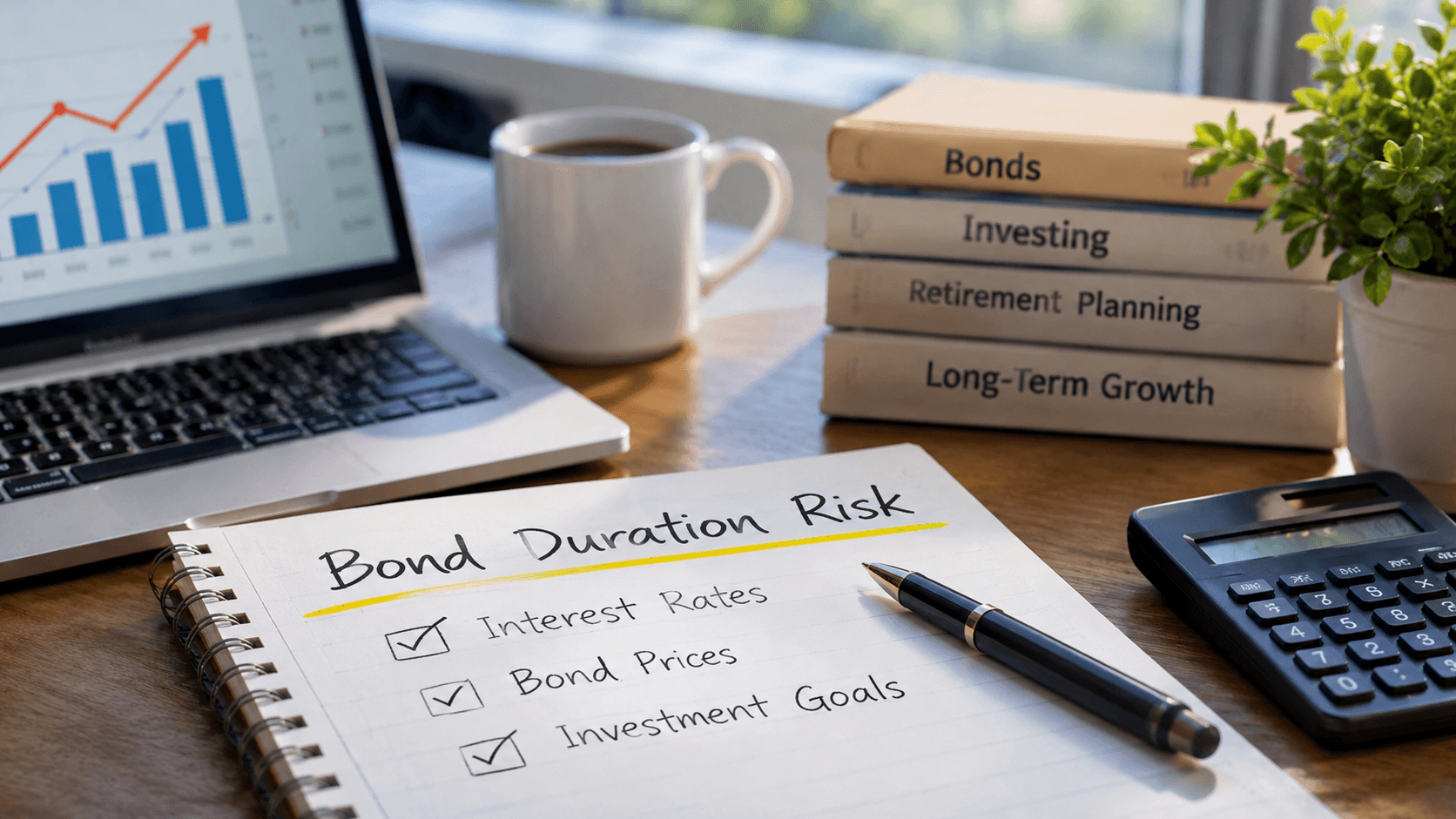
Bond duration risk describes how much a bond’s price may change when interest rates move. If interest rates rise, existing fixed-rate bonds generally lose market value. When rates fall, those same bonds may become valuable to investors.
Understanding bond duration risk can help you evaluate fixed-income investments, compare different types of bonds, and make decisions that fit your financial goals.
If you’re researching bonds, you can also explore financial options and investment resources to help you understand the choices available.
Bond duration risk refers to how sensitive a bond’s market price is to changes in interest rates. Duration helps estimate how much a bond’s value could rise or fall when market yields change.
Generally, bonds with longer durations experience larger price movements than bonds with shorter durations.
For example, a bond with a modified duration of five years may lose approximately 5% of its market value if its yield increases by one percentage point. If the yield falls by the same amount, its price may increase by approximately 5%.
These are estimates rather than guaranteed results. Actual price changes depend on several factors, including the size of the yield movement and the bond’s characteristics.
Understanding this relationship can help you evaluate interest rate risk before purchasing individual bonds or bond funds.
Bond prices and market yields generally move in opposite directions.
Suppose you own a bond that pays a fixed 3% annual coupon. If newly issued comparable bonds provide higher yields, your existing bond may become less attractive to potential buyers.
Its market price would generally need to fall to provide a competitive yield.
When market yields decline, the opposite may happen. Your existing bond’s fixed payments may become attractive, potentially increasing its market value.
This relationship explains why comparing financial products and investment choices can be helpful when evaluating bonds.
Duration provides a practical estimate of bond price sensitivity.
A bond with higher duration generally reacts strongly to changes in yields. A lower-duration bond typically experiences smaller price movements under similar conditions.
Here’s how different modified durations may respond to a one-percentage-point yield change.
| Modified Duration | Yield Rises 1% | Yield Falls 1% |
| 2 years | -2% | +2% |
| 5 years | -5% | +5% |
| 8 years | -8% | +8% |
| 10 years | -10% | +10% |
These figures are simplified estimates based on modified duration. Actual price changes may differ because of convexity and other market factors. They do not represent total investment returns.
For example, suppose you invest $10,000 in a bond with a modified duration of eight years.
If its yield increases by one percentage point, its market value could decline by approximately $800, assuming other factors remain unchanged.
However, duration measures estimated price sensitivity rather than the exact amount you will gain or lose.
Modified duration measures the approximate percentage change in a bond’s price for a one-percentage-point change in its yield.
It differs from Macaulay duration, which measures the weighted average time until a bond’s cash payments are received.
For everyday investors, modified duration is often easier to use when comparing interest rate exposure.
Several characteristics influence how sensitive bonds are to changing interest rates.
Bonds with longer maturities generally have higher duration than otherwise comparable bonds with shorter maturities.
For example, a 20-year fixed-rate bond will typically experience greater price changes than a two-year bond when yields move by the same amount.
However, maturity and duration are different measurements. Two bonds with identical maturity dates may have different durations because of their coupon payments and yields.
Bonds with lower coupon rates generally have higher duration than comparable bonds with higher coupon rates.
This happens because a greater portion of their value comes from payments received further into the future.
Zero-coupon bonds can be especially sensitive to interest rate changes because they provide no periodic coupon payments.
A bond’s duration can change as market yields move.
This means the duration reported when you purchase a bond may differ from its duration later.
Reviewing current bond information can help you understand your investment’s changing exposure.
Some bonds include features that affect their expected payments.
For example, callable bonds allow issuers to repay the debt before its scheduled maturity under specified conditions.
These features can affect price behavior, making effective duration a useful measurement for certain bonds.
If you’re evaluating different fixed-income products, reviewing available financial resources may help you identify important questions about maturity, interest payments, and potential risks.
Understanding short-term vs. long-term bonds can help you select investments that match your financial timeline.
Short-term bonds generally have lower duration, meaning their market prices tend to react less strongly to changes in yields.
Long-term bonds typically have higher duration and can experience larger price fluctuations.
| Feature | Short-Term Bonds | Long-Term Bonds |
| Typical maturity | 1–3 years | 10 years or longer |
| Duration risk | Generally lower | Generally higher |
| Price fluctuations from yield changes | Usually smaller | Usually larger |
| Reinvestment risk | Generally higher | Generally lower for fixed coupons |
| Common consideration | Near-term financial needs | Longer investment timelines |
These comparisons assume otherwise similar fixed-rate bonds. Actual risks depend on credit quality, coupon rates, yields, and other characteristics.
Short-term bonds may be appropriate if you expect to need your money within a few years or prefer smaller interest-rate-driven price movements.
Long-term bonds may suit investors who can tolerate greater fluctuations or want exposure to longer-term fixed-income investments.
However, shorter duration does not eliminate investment risk.
A bond can still lose value because of issuer financial problems, inflation, or unfavorable market conditions.
Before choosing between different maturities, you can compare financial options for your investment goals and evaluate how each choice fits your timeline.
Bond fund duration measures how sensitive a fund’s portfolio is to changes in interest rates.
Bond funds typically hold numerous securities, making them different from owning a single bond.
When you purchase an individual fixed-rate bond, you generally receive its face value at maturity if the issuer fulfills its obligations. However, its market price may change before maturity.
A traditional bond fund typically buys and sells securities over time and does not have a single maturity date when all shareholders automatically receive their original investment.
For example, a bond fund with an effective duration of six years may experience an approximate 6% price decline if relevant market yields rise by one percentage point.
The actual change may differ because of credit spreads, portfolio adjustments, convexity, and other factors.
When comparing bond funds, review several characteristics:
These details can help you evaluate a fund beyond its advertised yield.
You may also find it helpful to research investment products and financial services before selecting an investment approach.
Bond portfolio management involves selecting investments based on your goals, financial timeline, and tolerance for changing market values.
Although interest rate movements cannot be controlled, several approaches may help you manage duration exposure.
If you expect to need your money soon, shorter-duration investments may help reduce exposure to interest-rate-driven price changes.
For longer-term goals, you may be comfortable holding bonds with greater duration.
Matching investments to your expected cash needs can help reduce the likelihood of selling during an unfavorable market period.
A bond ladder involves purchasing individual bonds with different maturity dates.
As each bond matures, you can decide to use the proceeds or reinvest them based on your needs and prevailing interest rates.
This strategy may help distribute reinvestment opportunities across different dates.
However, bond ladders still involve credit risk, inflation risk, and potential losses if bonds are sold before maturity.
Your bond portfolio’s duration may change as securities approach maturity, yields fluctuate, or fund managers adjust their holdings.
Reviewing duration periodically can help you determine if your investments remain consistent with your financial goals.
Also check credit quality, expenses, and the overall balance of your portfolio.
Predicting future interest rates consistently is difficult.
Instead of relying entirely on forecasts, focus on your investment timeline, expected cash needs, and comfort with market fluctuations.
When evaluating possible strategies, exploring financial planning options may help you compare approaches before making a commitment.
Higher duration means greater sensitivity to interest rate movements, although that sensitivity can work in either direction.
When yields rise, longer-duration bonds generally experience larger price declines.
When yields fall, those same bonds may experience larger price increases.
For investors with longer financial timelines, higher duration may be an acceptable part of their investment strategy.
However, greater price sensitivity can create problems if you need to sell during a period of rising yields.
Duration should therefore be evaluated alongside other investment characteristics.
A bond with low duration can still carry significant credit risk, while a high-quality bond with longer duration may experience considerable price fluctuations because of changing yields.
Neither duration measurement alone determines if an investment is appropriate.
Before purchasing bonds or bond funds, think about how the investment fits your overall financial situation.
A few questions can help you evaluate your options.
How soon will you need your money?
Your financial timeline can influence how much duration exposure may be appropriate.
How comfortable are you with price changes?
If temporary declines would affect your financial plans, lower-duration investments may deserve attention.
What other risks are involved?
Credit quality, inflation, liquidity, and investment expenses can affect your results.
Are you investing for income or long-term growth?
Your investment objective can influence the types of bonds and maturities you choose.
How does the investment fit your existing portfolio?
Reviewing your overall allocation can help you understand how much exposure you have to changing interest rates.
Answering these questions can help you make decisions based on your financial needs rather than focusing entirely on yields.
Bond duration risk is an important factor when evaluating fixed-income investments because it helps explain how interest rate changes may affect bond prices.
Shorter-duration bonds generally experience smaller price movements when yields change, while longer-duration bonds can experience greater fluctuations.
However, duration is only one part of evaluating an investment.
Credit quality, costs, liquidity, inflation, and your financial timeline also deserve attention.
If you’re comparing fixed-income investments, you can review financial options and planning resources to help identify choices that may fit your goals.
Understanding these factors can help you make informed decisions while keeping potential risks aligned with your financial situation.