
Interest Rates Explained: What They Mean for Your Money and Financial Decisions
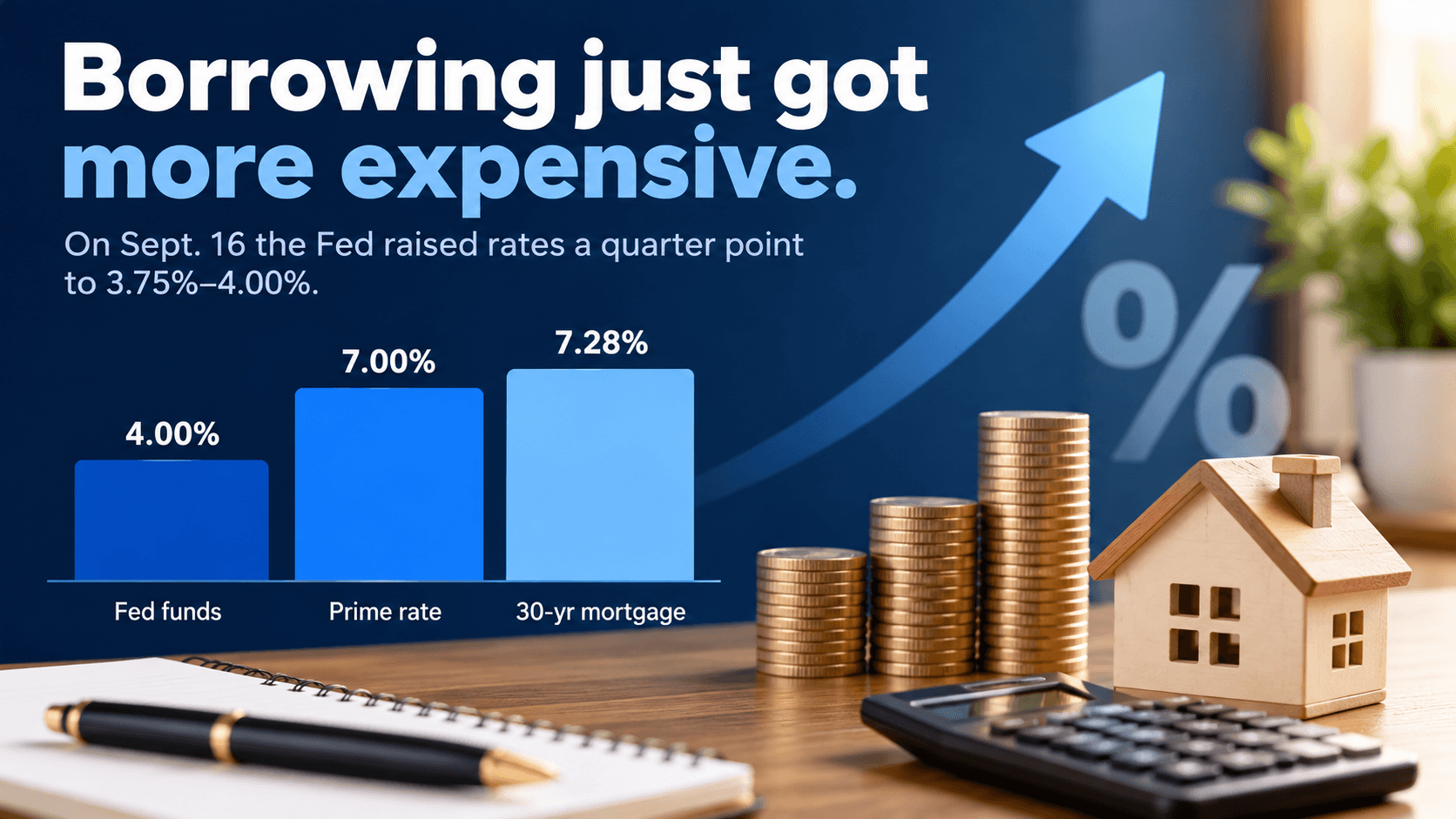
Interest Rates Explained: What They Mean for Your Money and Financial Decisions
Interest rates influence many everyday financial decisions, from using credit cards and financing a vehicle to buying a home and growing your savings.
When rates increase, borrowing can become more expensive. When they decrease, certain loans may become more affordable, although savings accounts might offer lower returns.
Understanding how interest rates work can help you make better financial choices without trying to predict every market movement.
What Are Interest Rates?
An interest rate is the amount a lender charges for borrowing money or the amount a financial institution pays on eligible deposits.
For example, borrowing $10,000 at a 6% annual simple interest rate would generate $600 in interest over one year if the entire principal remained outstanding.
Actual borrowing costs depend on repayment schedules, compounding methods, fees, and other loan terms.
When comparing financial products, distinguish between annual percentage rate (APR), which measures borrowing costs, and annual percentage yield (APY), which reflects deposit earnings with compounding.
Why Do Interest Rates Change?
Interest rates respond to economic conditions, financial markets, and monetary policy decisions.
In the United States, the Federal Reserve influences short-term borrowing costs through its benchmark interest rate.
Several factors affect these decisions:
- Inflation: Higher inflation may encourage policymakers to maintain or increase rates.
- Employment: Labor market conditions help indicate economic strength.
- Economic growth: Slower economic activity may encourage lower rates.
- Monetary policy: Central bank decisions influence broader financial conditions.
However, consumer interest rates do not always change immediately when the Federal Reserve adjusts its benchmark.
Lenders also consider market conditions, loan terms, and individual credit profiles.
How Interest Rates Affect Your Finances
Interest rate changes can influence several areas of your financial life.
Credit Card Balances
Many credit cards have variable APRs that can change alongside benchmark rates.
If you regularly carry a balance, higher rates may increase your interest charges.
Paying your full statement balance by the due date can help you avoid purchase interest when the applicable grace period remains in effect.
Mortgage Payments
Mortgage rates influence monthly payments and the total cost of homeownership.
For a $300,000 mortgage with a 30-year fixed term, approximate monthly principal-and-interest payments would be:
- 5% interest: $1,610
- 6% interest: $1,799
- 7% interest: $1,996
- 8% interest: $2,201
These estimates exclude property taxes, homeowners insurance, and other housing expenses.
Even a small difference in mortgage rates can substantially affect your long-term borrowing costs.
Auto Loan Costs
Interest rates also influence vehicle financing.
For example, financing $30,000 over 60 months would result in an approximate monthly payment of $566 at 5% interest, compared with $623 at 9%.
Comparing loan offers can help you identify more affordable financing terms.
Savings Account Earnings
Higher interest rates may benefit savers when financial institutions increase deposit yields.
A $10,000 savings balance earning 4% APY would generate approximately $400 over one year if the yield remained unchanged and no money was added or withdrawn.
Compare APYs, account fees, minimum balance requirements, and applicable deposit insurance before choosing an account.
Five Ways to Manage Changing Interest Rates
You cannot control market rates, but you can adjust your financial decisions.
- Prioritize expensive debt. Make required minimum payments while directing additional funds toward balances with higher interest rates.
- Compare borrowing offers. Review APRs, fees, repayment terms, and total financing costs before accepting a loan.
- Maintain emergency savings. Accessible savings may reduce your need to borrow when unexpected expenses arise.
- Review variable-rate loans. Understand when your interest rate can change and how adjustments affect your payments.
- Focus on total costs. A smaller monthly payment may result in more interest paid over a longer repayment period.
These habits can help you maintain financial flexibility during changing economic conditions.
Should You Wait for Interest Rates to Fall?
Waiting for lower rates may seem appealing, especially when considering a major purchase.
However, predicting future interest rate movements is difficult.
Rates may remain elevated longer than expected, and changes in home prices or vehicle costs could offset potential financing savings.
Before delaying a purchase, consider whether it is essential, how comfortably the payments fit your budget, and whether you have sufficient emergency savings.
For larger purchases, compare different financing scenarios rather than making decisions based entirely on anticipated rate cuts.
Make Interest Rates Work With Your Financial Goals
Interest rates affect both sides of your finances: what you pay to borrow and what you may earn from saving.
Understanding these differences can help you manage debt, compare financial products, and plan major purchases more effectively.
Review your existing borrowing costs, explore competitive savings options, and maintain a budget that accommodates changing expenses.
Start by checking the interest rates on your current accounts and loans. Knowing what you’re paying and earning is a practical first step toward making more informed financial decisions.
Suggested Posts
All PostsAllAll PostsAll

Why Travel Rewards Benefits May Be Worth Exploring Before Your Next Vacation
- Jeff Weasley

Interest Rates Explained: What They Mean for Your Money and Financial Decisions
- Katie Swift


