Home Warranty vs Homeowners Insurance – What’s the Difference?
Owning a home comes with several types of expenses, from routine maintenance to unexpected damage. Two products homeowners may encounter are home warranties and homeowners insurance. Their names can make them sound similar, yet they handle very different situations.
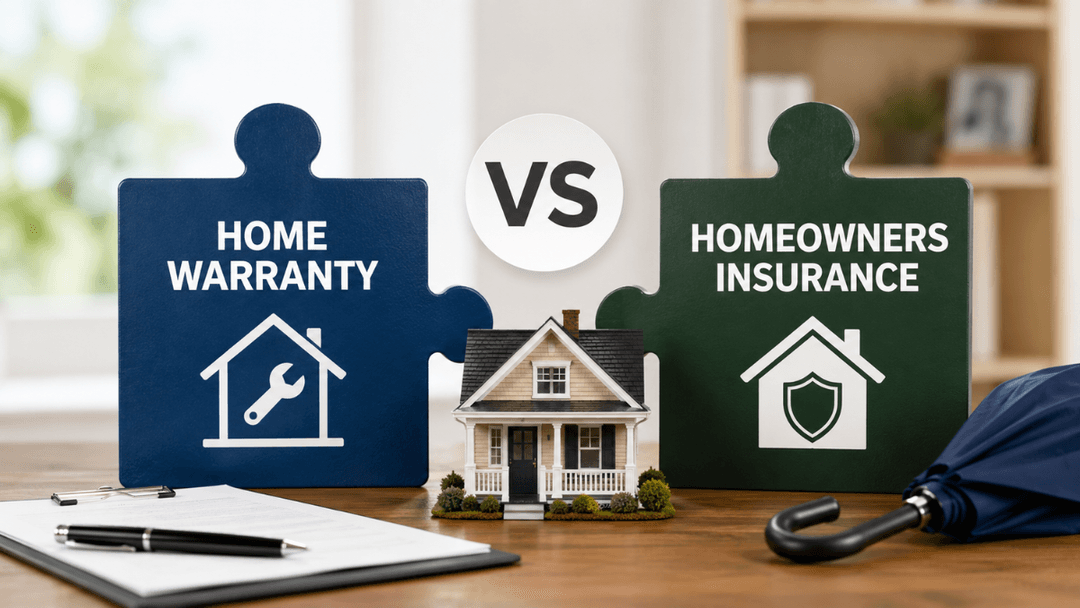
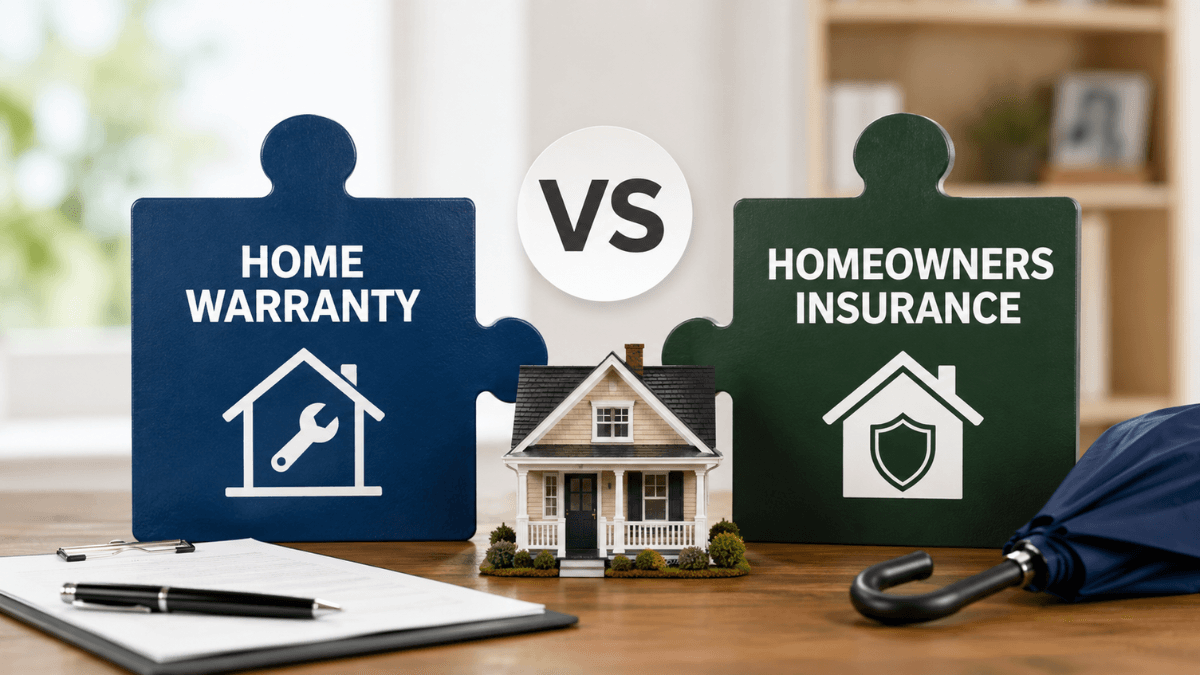
The main difference between home warranty vs homeowners insurance comes down to what triggers the coverage. A home warranty is generally a service contract that may help pay for eligible repairs or replacements involving specified appliances and home systems. Homeowners insurance provides financial protection against covered losses involving the home, personal belongings, liability, and other risks listed in the policy.
Knowing how each works can help homeowners identify where their protection comes from when an appliance fails, a storm damages the house, or another covered event causes a loss.
What Is a Home Warranty?
A home warranty is generally a service contract purchased separately to cover certain repairs or replacements for household appliances and systems. The Federal Trade Commission (FTC) explains that products commonly called home warranties are service contracts rather than warranties in the traditional sense.
A home warranty plan may include items such as:
- Heating systems
- Air conditioning systems
- Plumbing systems
- Electrical systems
- Refrigerators
- Dishwashers
- Ovens or ranges
- Washers and dryers
Actual coverage varies by contract. Some plans focus primarily on appliances or systems, while others may include both categories.
Coverage also does not mean that every problem involving a listed appliance or system qualifies for service. Contracts may contain exclusions, reimbursement limits, service fees, and specific requirements for repairs. The FTC recommends reviewing these conditions before purchasing a service contract.
What Is Homeowners Insurance?
Homeowners insurance is an insurance policy designed to provide financial protection against certain losses involving your home and property.
According to the National Association of Insurance Commissioners (NAIC), homeowners policies generally provide coverage for the structure of the home. Most policies also provide protection for personal belongings and personal liability arising from covered accidents.
Typical homeowners insurance coverage may include:
- Dwelling coverage
- Other structures coverage
- Personal property coverage
- Loss-of-use coverage
- Personal liability coverage
- Medical payments coverage
The policy pays according to its terms when damage results from a covered peril. Common covered perils can include fire, lightning, windstorm, hail, theft, vandalism, and certain other events, depending on the policy.
Homeowners insurance policies also contain exclusions. For instance, standard policies generally do not cover flooding or earthquakes, although separate policies or additional coverage may be available.
Home Warranty vs Homeowners Insurance at a Glance
The easiest way to understand home warranty vs homeowners insurance is to compare what each product is designed to handle.
| Feature | Home Warranty | Homeowners Insurance |
| Type of product | Service contract | Insurance policy |
| Main purpose | Eligible repairs or replacements of specified appliances and systems | Financial protection against covered property losses and liability |
| Appliance breakdowns | May be covered under the contract | Generally depends on the cause of the damage |
| Home systems | Certain systems may qualify for service | Damage may qualify when caused by a covered peril |
| Dwelling damage | Generally not its primary purpose | Typically covered when caused by an insured peril |
| Personal belongings | Generally not covered | Commonly included |
| Theft | Generally not covered | Commonly covered subject to policy terms |
| Personal liability | Generally not covered | Commonly included |
| Cost when making a claim or request | Service fee may apply | Deductible may apply |
| Required by mortgage lenders | Generally no | Most mortgage lenders require it |
| Coverage restrictions | Contract exclusions and limits apply | Policy exclusions, limits, and deductibles apply |
Specific protections always depend on the individual contract or insurance policy.
The Biggest Difference Is Why Something Needs Repair
When deciding which type of coverage might apply, one of the first questions to ask is: What caused the problem?
A home warranty generally focuses on eligible repairs or replacements involving specified appliances and systems under the service contract.
Homeowners insurance focuses on losses caused by covered perils.
For example, suppose your refrigerator stops working and the failure qualifies under your home warranty contract. The warranty provider may arrange service according to the terms of the agreement.
Now suppose a covered fire damages that refrigerator along with other belongings. In that situation, the personal property portion of a homeowners insurance policy may apply, subject to the policy’s deductible, limits, and other terms.
The item involved can be the same. The cause of the loss can determine which coverage may apply.
What Does a Home Warranty Typically Cover?
Home warranty coverage varies considerably among companies and plans. The FTC says these service contracts typically apply to repairs or replacements involving items such as appliances or air conditioning systems for a specified period.
Plans may cover certain components of:
Major Home Systems
Depending on the contract, coverage may include heating, air conditioning, electrical, and plumbing systems.
Household Appliances
Plans may include refrigerators, dishwashers, ranges, built-in appliances, washers, or dryers.
However, seeing an appliance or system listed in a plan does not necessarily mean every part or type of failure is covered.
A contract may specify reimbursement caps, excluded components, maintenance requirements, service fees, or circumstances under which a claim can be denied. Homeowners should review the actual contract instead of relying only on a general list of covered items.
What Does Homeowners Insurance Typically Cover?
Homeowners insurance provides several categories of financial protection.
Damage to the Home
Dwelling coverage may pay to repair or rebuild the house when damage results from a covered peril.
The NAIC notes that homeowners policies cover the home structure, including attached structures, fixtures, and built-in appliances. Coverage is subject to the policy’s terms and limits.
Personal Property
Furniture, electronics, clothing, and other belongings may be protected against covered losses.
Policies can impose limits on certain categories of property, so homeowners with valuable items may need to review whether their existing limits are sufficient.
Additional Living Expenses
If a covered loss makes the home temporarily uninhabitable, loss-of-use coverage may help pay certain additional living expenses while repairs are underway.
Liability Protection
Home insurance protection commonly includes personal liability coverage.
This coverage may provide financial protection if the policyholder is legally responsible for certain injuries to another person or damage to someone else’s property. Homeowners policies may also include medical payments coverage for qualifying injuries.
These protections are areas where homeowners insurance differs significantly from a typical home warranty contract.
What Happens When an Appliance Breaks?
Appliance problems are a useful example of the difference between the two products.
Suppose your dishwasher suddenly stops operating.
A home warranty might provide service if the dishwasher and the particular failure meet the conditions of the contract. You may need to submit a service request and pay the applicable service fee.
Homeowners insurance generally does not function as a repair plan for an appliance that stops working through routine use or wear. Standard homeowners policies generally exclude routine wear and tear.
However, if an appliance is damaged by a peril covered by the homeowners policy, the situation could be different.
That distinction makes the cause of the damage particularly important.
Home Warranty Service Fees vs Home Insurance Deductibles
Both products can involve out-of-pocket expenses, although the charges work differently.
A home warranty may require a home warranty service fee when you request service. The amount and circumstances under which it applies depend on the contract.
The FTC recommends evaluating service contracts based on their upfront price along with expenses such as deductibles or service fees and reimbursement limits.
Homeowners insurance generally uses a deductible. This is the amount the policyholder is responsible for paying toward a covered property loss before the insurer pays according to the policy.
For example, filing an eligible homeowners insurance claim with a $1,000 deductible generally means the homeowner is responsible for the first $1,000 of the covered loss. Actual claim payments remain subject to policy terms and limits.
The NAIC notes that deductibles commonly apply to coverage for the home and personal property.
Do You Need Homeowners Insurance If You Have a Home Warranty?
A home warranty should not be treated as a replacement for homeowners insurance.
The two products address different financial risks. A home warranty does not generally provide the dwelling, personal property, liability, and loss-of-use protections associated with homeowners insurance.
There is another practical distinction for homeowners with mortgages. The NAIC states that most mortgage lenders require homeowners insurance while the mortgage remains in place.
A home warranty, on the other hand, is generally optional.
Do You Need a Home Warranty If You Have Homeowners Insurance?
Having homeowners insurance does not automatically mean you need a home warranty.
Homeowners insurance and home warranties address different circumstances, so the decision depends on the household and the terms of the available warranty plan.
Before purchasing a home warranty, it can help to examine:
- The age and condition of your appliances
- The age of major home systems
- Existing manufacturer warranties
- The price of the service contract
- Service fees
- Coverage limits
- Contract exclusions
- Repair and replacement conditions
- Your ability to pay for repairs independently
The FTC recommends checking for duplicate coverage before buying a service contract. A home warranty might overlap with an existing manufacturer warranty or another form of protection.
Some homeowners may prefer paying for eligible service-contract coverage, while others may choose to put money aside for future repairs.
Home Warranty vs Home Insurance: Which One Covers Common Problems?
Here are several hypothetical situations showing how the distinction may work:
| Situation | Home Warranty May Apply | Homeowners Insurance May Apply |
| Covered dishwasher experiences an eligible breakdown | ✓ | Usually no |
| Covered HVAC system experiences an eligible failure | ✓ | Usually no |
| Fire damages the home | Usually no | ✓ |
| Personal belongings are stolen | Usually no | ✓ |
| Covered storm damages the roof | Usually no | ✓ |
| Visitor is injured and homeowner is legally liable | No | ✓ |
| Refrigerator has an eligible mechanical failure | ✓ | Usually no |
| Flood damages the home | No | Generally requires separate flood coverage |
These examples are general illustrations. Actual coverage depends on the contract or policy and the circumstances surrounding the loss.
What Should You Check Before Choosing Coverage?
Comparing home warranty vs homeowners insurance requires looking beyond the names of the products.
For a home warranty, review the covered appliances and systems, exclusions, service fees, reimbursement limits, contract length, cancellation rules, and claims process.
For homeowners insurance, review dwelling limits, personal property coverage, liability limits, deductibles, exclusions, replacement cost provisions, additional coverage options, and any risks that require separate insurance.
Homeowners may also want to review their insurance limits periodically. The NAIC advises that dwelling coverage should be sufficient to cover the cost of fully rebuilding the insured home.
Reading both contracts carefully can help identify coverage gaps and prevent assumptions about what will be paid when something goes wrong.
Understanding Where Each Type of Protection Fits
The home warranty vs homeowners insurance comparison becomes easier once the purpose of each product is clear.
A home warranty is generally an optional service contract that may help with eligible repairs or replacements involving specified appliances and home systems. Homeowners insurance provides broader financial protection against covered losses involving the home, belongings, liability, and certain additional living expenses.
One product does not automatically replace the other. Homeowners insurance may be required by a mortgage lender, while purchasing a home warranty generally comes down to personal preference, the contract terms, existing coverage, and how a homeowner plans to handle future repair expenses.
Before paying for either type of protection, review the terms carefully. What is covered, what is excluded, and how much you could pay out of pocket can matter far more than the product name.