What Makes Direct Deposit a Preferred Payment Option Today?
Getting paid has become much easier over the years, and direct deposit has become one of the most common payment methods.
Instead of waiting for a paper check or visiting a payment office, money is sent electronically into a designated account.
Many employers, government agencies, and organizations now use this payment method because it is generally fast, reliable, and convenient.
If you’re starting a new job, changing employers, or simply curious about how electronic payments work, understanding direct deposit can help you make informed decisions.
What Is Direct Deposit?
Direct deposit is an electronic payment method that transfers money directly into a financial account through an automated payment network.
It removes the need for physical checks, allowing payments to arrive electronically on scheduled payment dates.
Common uses include:
- Employee payroll
- Government benefit payments
- Tax refunds
- Pension payments
- Social assistance programs
- Certain insurance reimbursements
Once the payment is processed, the funds are typically available according to the receiving institution’s processing schedule.
How Does Direct Deposit Work?
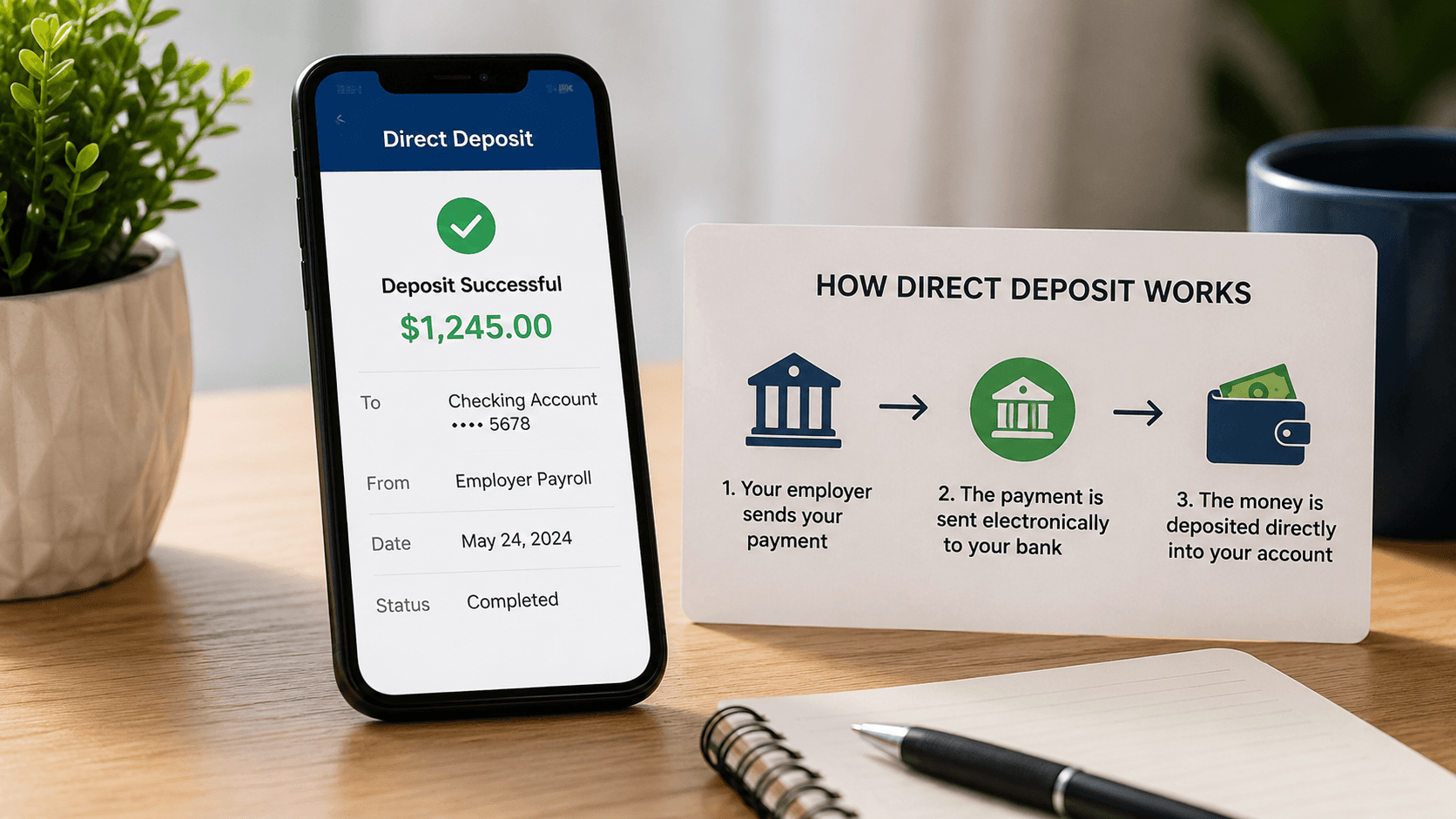
The process is fairly straightforward.
- An employer or payer collects your payment information.
- Your account details are securely stored for payroll purposes.
- On payday, payment instructions are sent electronically.
- The payment network processes the transfer.
- The funds arrive in your designated account.
The timing may vary slightly depending on weekends, holidays, payroll schedules, and processing times.
Why Many People Choose Direct Deposit
Many individuals prefer direct deposit because it simplifies receiving payments.
Some common advantages include:
Faster Access to Funds
Electronic transfers often arrive on payday without requiring a trip to deposit a check.
Improved Convenience
You don’t need to visit a branch or use a mobile deposit feature for every paycheck.
Reduced Risk of Lost Checks
Paper checks can sometimes be misplaced, delayed, or damaged during delivery. Electronic payments reduce those risks.
Automatic Payroll Processing
Employers often find payroll easier to manage with automated electronic transfers, which may reduce administrative work.
Better Record Keeping
Payment records are typically available through online statements or payroll systems, making it easier to review previous transactions.
Common Uses of Direct Deposit
Direct deposit is used for many types of payments, including:
| Payment Type | Common Purpose |
|---|---|
| Payroll | Employee wages and salaries |
| Government Benefits | Retirement, disability, and assistance programs |
| Tax Refunds | Refunds from tax agencies |
| Pension Payments | Retirement income |
| Insurance Payments | Eligible claim reimbursements |
| Contractor Payments | Recurring business payments |
Direct Deposit vs Paper Checks
| Feature | Direct Deposit | Paper Check |
|---|---|---|
| Payment Speed | Usually faster | May require mailing and deposit |
| Convenience | High | Moderate |
| Risk of Loss | Lower | Higher |
| Deposit Required | No | Yes |
| Paper Usage | None | Yes |
| Payment Tracking | Easier electronically | Manual records may be needed |
How to Set Up Direct Deposit
Setting up direct deposit usually takes only a few steps.
1. Obtain the Enrollment Form
Your employer or payer may provide a paper or digital enrollment form.
2. Provide Account Information
Typical information includes:
- Account number
- Routing number
- Account type
- Your name
Always verify the information before submitting it.
3. Submit the Form
Return the completed form according to your employer’s instructions.
4. Wait for Confirmation
The setup process may take one or more payroll cycles before becoming active.
Can You Split Your Direct Deposit?
In many cases, yes.
Some payroll systems allow employees to divide their paycheck among multiple accounts. For example:
- A portion for everyday spending
- Another portion for savings
- Another amount for recurring expenses
Availability depends on the employer’s payroll system.
Is Direct Deposit Safe?
Direct deposit is generally considered a secure payment method because it uses encrypted electronic processing systems.
Still, good security practices remain important.
Helpful tips include:
- Keep your account information private.
- Monitor your account regularly.
- Review every payroll statement.
- Report unexpected transactions promptly.
- Update your payment details whenever you change accounts.
No payment system is entirely risk-free, although following basic security practices may reduce potential issues.
What Happens If You Change Accounts?
If you open a new account, notify your employer before closing the previous one.
Many payroll departments recommend leaving the old account active until you confirm that future payments are arriving in the new account.
This approach may help avoid delayed payments.
Common Questions About Direct Deposit
Can direct deposit arrive early?
Some financial institutions may make funds available earlier than the official payday. Availability depends on the institution’s policies and when payment files are received.
What if payday falls on a holiday?
Processing schedules may change around weekends and holidays. Payments might arrive before or after the scheduled date depending on payroll timing.
Can employers require direct deposit?
Requirements vary by location and applicable labor laws. Some employers offer alternatives where required.
Can direct deposit fail?
Occasionally, payments may be delayed if incorrect account information was submitted or if payroll processing encounters an issue. Contact your payroll department if you notice a problem.
Common Direct Deposit Mistakes to Avoid
Although setup is simple, mistakes can happen.
Avoid these common errors:
- Entering the wrong routing number
- Typing an incorrect account number
- Forgetting to update payment information after changing accounts
- Closing an old account before confirming successful payments
- Ignoring payroll notifications
Taking a few extra minutes to review your information may prevent delays.
Frequently Asked Questions
How long does direct deposit take?
Once it’s fully set up, payments typically arrive on scheduled payday. Initial enrollment may require one or more payroll cycles.
Can direct deposit be canceled?
Yes. Employees generally need to notify their employer and complete updated payroll forms.
Does direct deposit work for part-time employees?
Many employers offer direct deposit for both full-time and part-time employees, although policies vary.
Can direct deposit be used for recurring government payments?
Yes. Many government agencies use electronic payment methods for eligible benefit programs and tax refunds.
What information is needed to enroll?
Most organizations request:
- Routing number
- Account number
- Account type
- Account holder’s name
What to Remember About Direct Deposit
Direct deposit has become a standard payment method because it provides a practical way to receive wages, government benefits, tax refunds, and other recurring payments electronically.
It may reduce paperwork, improve payment reliability, and simplify everyday money management.
While payment timing can vary slightly based on processing schedules, direct deposit remains a dependable option for many individuals who prefer electronic payments over paper checks.
Suggested Posts
All PostsAllAll PostsAll

Why Travel Rewards Benefits May Be Worth Exploring Before Your Next Vacation
- Jeff Weasley

Interest Rates Explained: What They Mean for Your Money and Financial Decisions
- Katie Swift