Why Consistent Banking Habits May Help Reduce Financial Stress
Financial success often starts with everyday choices rather than major changes.
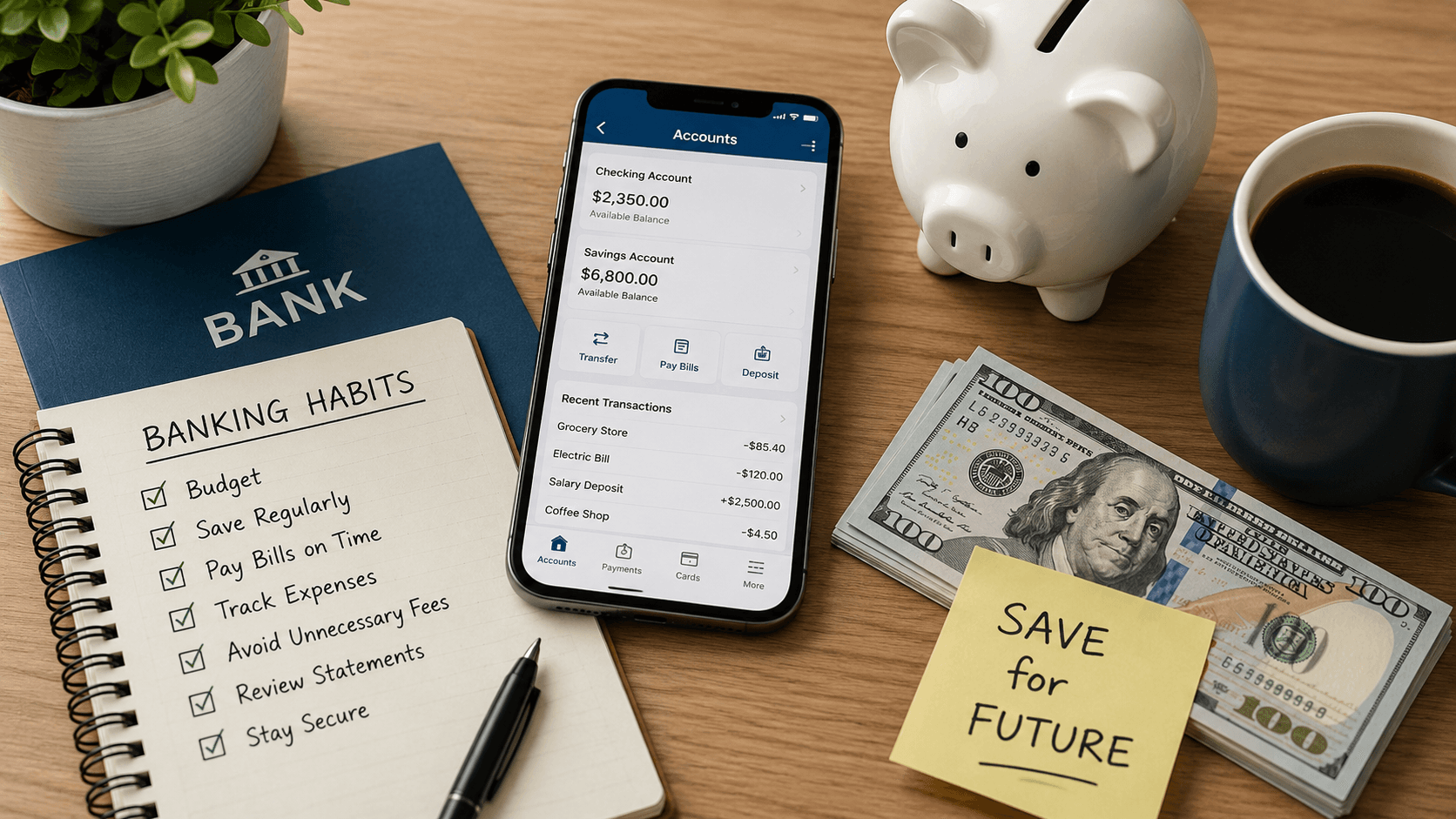
Small routines, such as reviewing account balances, paying bills on time, and tracking spending, may gradually improve how you manage your money.
These actions become banking habits that support better organization and financial awareness over time.
Good habits may help reduce unnecessary fees, make budgeting easier, and provide a clearer understanding of where your money goes each month.
While everyone’s financial situation is different, building consistent routines can make day-to-day money management feel less overwhelming.
What Are Banking Habits?
Banking habits refer to the regular actions people take when managing their financial accounts. These habits may include:
- Checking account balances regularly
- Reviewing monthly transactions
- Paying bills before due dates
- Monitoring automatic payments
- Saving part of every paycheck
- Keeping personal information secure
Some habits take only a few minutes each week, yet they may help you stay informed about your finances.
Why Are Good Banking Habits Important?
Developing healthy routines may support better financial organization over time.
Potential benefits include:
- Better awareness of spending
- Easier monthly budgeting
- Lower chance of missed payments
- Faster detection of unauthorized transactions
- More consistent progress toward savings goals
These habits may not solve every financial challenge, although they can provide a stronger foundation for managing everyday expenses.
Banking Habits Worth Building
1. Check Your Account Regularly
Reviewing your account every few days may help you:
- Spot unexpected charges
- Monitor deposits
- Track available funds
- Catch potential errors early
Many people find that frequent account reviews make budgeting easier.
2. Keep a Monthly Budget
A budget gives every dollar a purpose.
Your budget might include:
| Category | Example |
|---|---|
| Housing | Rent or mortgage |
| Utilities | Electricity, internet |
| Transportation | Fuel or public transit |
| Food | Groceries and dining |
| Savings | Emergency fund |
| Entertainment | Streaming services, hobbies |
Budgets can be adjusted as income or expenses change.
3. Save Before Spending
Many financial professionals encourage saving first whenever possible.
For example:
- Set aside a percentage of each paycheck.
- Transfer money into savings automatically.
- Build an emergency fund gradually.
Even modest contributions may grow over time through consistent saving.
4. Review Transactions Carefully
Checking transaction history may help identify:
- Duplicate charges
- Forgotten subscriptions
- Incorrect purchases
- Unauthorized activity
Regular reviews also improve awareness of spending patterns.
5. Pay Bills on Time
Paying bills before their due dates may help you:
- Avoid late fees
- Maintain organized finances
- Reduce unnecessary stress
- Keep monthly expenses predictable
Automatic payments may help for recurring bills, although they should still be monitored regularly.
6. Use Strong Security Practices
Protecting financial information has become increasingly important.
Helpful practices include:
- Creating strong passwords
- Enabling multi-factor authentication
- Avoiding suspicious emails
- Keeping contact information updated
- Monitoring account alerts
These steps may reduce the risk of unauthorized access.
7. Set Financial Goals
Goals provide direction for your banking habits.
Examples include:
- Saving $1,000 for emergencies
- Building a vacation fund
- Paying down existing debt
- Saving for a home purchase
- Planning future education expenses
Breaking larger goals into smaller milestones may help make progress easier to measure.
Common Banking Habits That May Cause Problems
Some routines can make money management harder over time.
Examples include:
- Ignoring account balances
- Spending without tracking purchases
- Paying bills late
- Overlooking recurring subscriptions
- Leaving financial alerts disabled
- Sharing passwords
Recognizing these habits is often the first step toward improving them.
How to Build Better Banking Habits
Changing routines does not always require major adjustments.
Try these practical ideas:
Start Small
Focus on one new habit each month instead of changing everything at once.
Schedule Weekly Reviews
Choose a consistent day each week to review your accounts and spending.
Automate Simple Tasks
Automatic savings transfers and bill payments may help reduce missed deadlines.
Track Your Progress
A simple spreadsheet, notebook, or budgeting app can make it easier to monitor improvements.
Revisit Your Goals
Financial priorities often change. Reviewing goals every few months helps keep your banking habits aligned with current needs.
Banking Habits by Financial Goal
| Goal | Helpful Banking Habit |
|---|---|
| Save money | Schedule automatic savings transfers |
| Stay within budget | Review expenses weekly |
| Avoid missed payments | Enable payment reminders |
| Improve organization | Categorize monthly spending |
| Protect finances | Monitor account activity regularly |
| Prepare for emergencies | Maintain a dedicated emergency fund |
Frequently Asked Questions
How often should you check your bank account?
Many people check their accounts several times each week. Others prefer daily or weekly reviews. The right schedule depends on your financial activity and personal preference.
Can banking habits improve budgeting?
Yes. Reviewing transactions regularly may help identify spending patterns and make budget adjustments easier.
Should you automate savings?
Automatic transfers may encourage consistent saving because money is moved before it can be spent elsewhere.
Why should you monitor transactions?
Regular monitoring may help identify errors, unauthorized activity, or forgotten recurring charges sooner.
What is one banking habit everyone can start today?
Reviewing your account balances and recent transactions takes only a few minutes and may improve awareness of your finances.
Banking Habits That Can Help You Stay Financially Organized
Good banking habits develop through consistent daily and weekly routines rather than dramatic changes.
Reviewing your accounts, following a budget, paying bills on time, protecting your financial information, and working toward realistic savings goals may gradually improve your overall money management.
No single habit guarantees financial success, and every person’s situation is different.
Still, making thoughtful adjustments over time may help you stay organized, reduce avoidable mistakes, and support your long-term financial planning with greater confidence.
Suggested Posts
All PostsAllAll PostsAll

Why Travel Rewards Benefits May Be Worth Exploring Before Your Next Vacation
- Jeff Weasley

Interest Rates Explained: What They Mean for Your Money and Financial Decisions
- Katie Swift